
What Is a Macchiato?
A macchiato is an espresso-based coffee drink that originated in Italy, where the term “macchiato” means “stained” or “marked” in Italian. This name reflects how milk is added - either a small amount of milk stains the espresso, or a shot of espresso stains the milk. There are two main types of macchiato: the espresso macchiato, where a shot of espresso is marked with a small amount of milk foam, and the latte macchiato, where steamed milk is stained with espresso. Unlike milk-forward drinks such as the latte, cappuccino, or cortado, the macchiato retains a bold espresso flavor with only minimal milk, offering a concentrated coffee experience. This makes it ideal for coffee drinkers who prefer marked or stained coffee over diluted alternatives.
Types of Macchiato
Macchiatos can be categorized into several distinct types based on espresso concentration, milk preparation, and serving method. The two core styles—espresso macchiato and latte macchiato—differ in how milk and espresso are layered. Other variations, including the double macchiato, iced macchiato, caramel macchiato, long macchiato, and long mac topped up, add regional flair, flavoring, or volume through customized ratios and techniques.
Espresso Macchiato (Caffè Macchiato)
The espresso macchiato, also known as caffè macchiato, is made by topping a single shot of espresso with a small amount of milk foam. This method preserves the drink’s bold intensity while slightly softening its edge. The milk foam adds visual contrast and a touch of creaminess without diluting the coffee’s core flavor.
Latte Macchiato
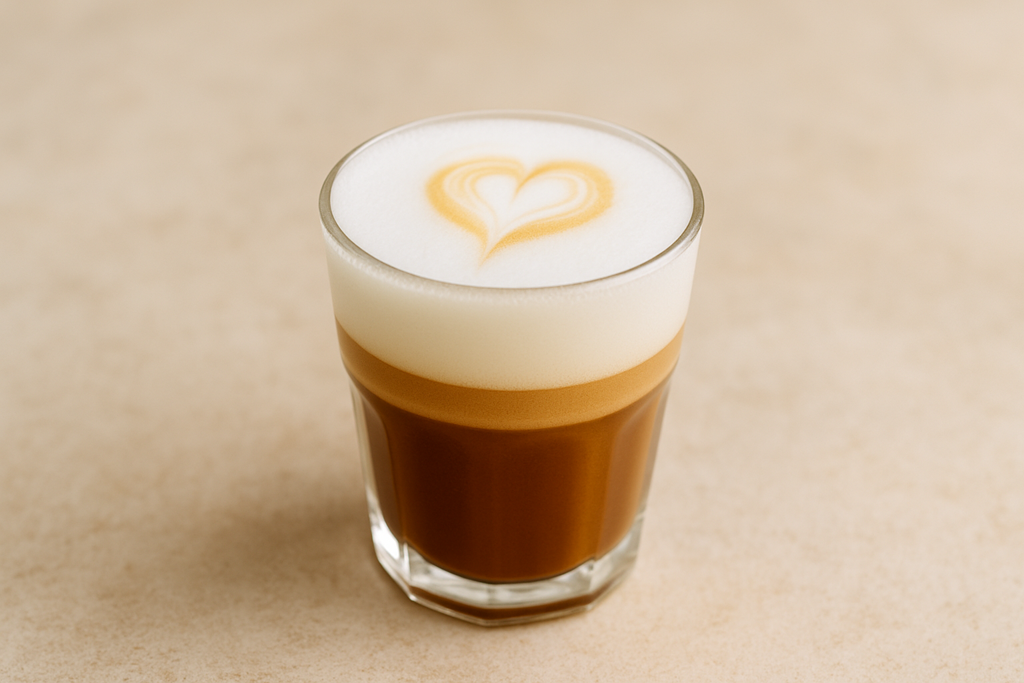
A latte macchiato begins with steamed milk poured into a tall glass, followed by espresso added on top. This reversed layering creates a distinct milk-dominant flavor and a layered appearance. The espresso visually and flavorfully stains the milk, resulting in a gentler, more approachable drink.
Other Macchiato Variants
- Iced macchiato: Served cold over ice with optional milk and flavor syrups, offering a refreshing version that retains espresso prominence.
- Caramel macchiato: Made with vanilla syrup and topped with caramel drizzle, this sweetened version blends dessert-like elements with macchiato structure.
- Long macchiato: A double shot of espresso with a small amount of milk, typically served in a larger glass to emphasize visual layering.
- Long mac topped up: A variation of the long macchiato with added steamed milk, increasing drink volume and reducing intensity.
Macchiato Flavor and Strength
A macchiato is defined by its strong coffee flavor due to the high espresso concentration and minimal milk dilution. The drink’s taste profile emphasizes boldness, low sweetness, and pronounced bitterness, especially in the espresso macchiato. The milk component—usually foamed or steamed—is limited, allowing the espresso to dominate the flavor. Milk dilution in a latte macchiato slightly softens the flavor, creating a creamier impression. However, compared to lattes or cappuccinos, the macchiato remains the most intense, providing a concentrated caffeine and flavor experience per ounce.
Macchiato Serving Size and Presentation
The standard serving size for an espresso macchiato is approximately 2 ounces, highlighting its concentrated nature. Latte macchiatos may be served in larger glasses, up to 8 ounces, due to their higher milk content. Ideal serving temperatures range from 60 to 66 °C, preserving espresso aroma and flavor while allowing immediate consumption. Presentation varies: espresso macchiatos are typically served in small demitasse cups or glass espresso glasses, while latte macchiatos are layered in tall transparent glasses. In Italy, macchiatos are consumed quickly at cafés, while in Australia, variations like the long mac topped up are often served in larger volumes with more milk.
Macchiato Nutrition Facts
The table below compares the nutrition facts of common macchiato types, including serving size, calories, caffeine, and basic nutrients.
| Drink Type | Serving Size (oz / ml) | Calories (kcal) | Caffeine (mg) | Protein (g) | Fat (g) | Carbohydrates (g) |
|---|---|---|---|---|---|---|
| Espresso Macchiato | 2 oz / 60 ml | 13 | 63 | 0.5 | 0.2 | 0.8 |
| Latte Macchiato | 8 oz / 240 ml | 130 | 63 | 6 | 5 | 11 |
| Caramel Macchiato | 12 oz / 355 ml | 206 | 75 | 6 | 6 | 27 |
Macchiato vs Latte vs Cappuccino vs Cortado
The table below compares the calorie count, caffeine level, and basic nutrition of popular macchiato types based on their standard serving sizes.
| Drink | Espresso Content | Milk-to-Espresso Ratio | Texture | Flavor Intensity | Typical Serving Size | Glassware |
|---|---|---|---|---|---|---|
| Macchiato | Single or double shot | High espresso, low milk | Foamy top, minimal milk | Strong coffee flavor | 2–3 oz | Small glass or demitasse cup |
| Latte | Single or double shot | 1:3 to 1:5 | Creamy texture with light foam | Mild, creamy flavor | 8–12 oz | Tall glass or mug |
| Cappuccino | Single or double shot | 1:1:1 (espresso:steamed milk:foam) | Thick milk foam | Balanced flavor | 5–6 oz | Ceramic cup |
| Cortado | Double shot | 1:1 | Silky and smooth | Strong yet balanced | 4 oz | Small glass tumbler |
Macchiato History and Evolution
The macchiato originated in Italy as a way for baristas to indicate an espresso that had been “marked” with a small amount of milk. The linguistic root of the word “macchiato” comes from the Italian for “stained” or “spotted,” reflecting its minimal milk addition. Historically, the drink served a practical purpose—distinguishing espresso with milk from plain espresso. Its preparation evolved from similar drinks like café pingado in Portugal and Brazil, which also featured espresso with a touch of milk. As coffee culture expanded globally, macchiato adaptations emerged, particularly in cities like Perth and Melbourne in Australia, where variations such as the long macchiato and long mac topped up gained popularity. Today, macchiatos reflect regional coffee preferences while maintaining their core identity as espresso-based drinks.
Frequently Asked Questions About Macchiatos
What is the difference between a latte and a macchiato?
A latte contains significantly more milk than a macchiato, resulting in a creamy flavor and smooth texture. In contrast, a macchiato has a higher milk-to-espresso ratio favoring espresso, producing a stronger coffee flavor. While a latte blends steamed milk and espresso together, a macchiato layers or stains the espresso with minimal milk, preserving its boldness.
Is a macchiato stronger than a cappuccino?
A macchiato is generally stronger than a cappuccino because it contains less milk and emphasizes the espresso's intensity. While a cappuccino uses milk foam in equal proportion to espresso and steamed milk, the macchiato uses only a small amount of milk foam, allowing the espresso to dominate the flavor profile and increase perceived coffee strength.
What is an upside-down macchiato?
An upside-down macchiato is a macchiato made by reversing the traditional preparation order—pouring espresso over steamed milk instead of adding milk to espresso. This method creates a drink that resembles a latte in both appearance and flavor, especially when layered with vanilla syrup.
Is a caramel macchiato the same as a regular macchiato?
No, a caramel macchiato is not the same as a regular macchiato. While both use espresso, the caramel macchiato includes steamed milk, vanilla syrup, and caramel drizzle, making it a sweeter, dessert-like drink. In contrast, a traditional macchiato focuses on espresso strength with minimal milk and no added flavorings.
Which has more caffeine: latte or macchiato?
Caffeine content in both latte and macchiato depends on the number of espresso shots used. A standard single shot of espresso contains approximately 63 mg of caffeine, whether it is in a latte or a macchiato. Therefore, both drinks can have similar caffeine levels, but the macchiato delivers it in a more concentrated form due to less milk.
Are macchiatos served hot or cold?
Macchiatos can be served both hot and cold. Traditional versions, such as the espresso macchiato and latte macchiato, are typically served hot with hot milk or milk foam. However, flavored variants like the iced macchiato have gained popularity in modern cafés and are served cold over ice for a refreshing experience.
How many shots of espresso are in a macchiato?
A standard macchiato contains one shot of espresso. For a stronger option, a double macchiato or doppio macchiato uses two shots of espresso, increasing both the caffeine content and the intensity of flavor. The single shot of espresso serves as the foundation for this minimal milk beverage.
Is a macchiato supposed to be stirred?
Traditionally, a macchiato is not stirred. It is presented as a layered drink, with milk or foam placed on top of espresso. Stirring a macchiato blends these layers and alters the intended flavor experience, which is designed to contrast the rich espresso base with a touch of dairy.
When is the best time to drink a macchiato?
In many cultures, the best time to drink a macchiato is in the morning, aligning with traditional espresso consumption habits. However, due to its strong and concentrated nature, the macchiato is also ideal as an afternoon coffee or a post-meal drink, offering a quick and energizing pick-me-up.
Is a macchiato a healthy coffee option?
A macchiato can be a healthy coffee option, depending on the type. A traditional espresso macchiato is low in calories—around 13 kcal—with very little sugar or fat. In contrast, flavored versions like the caramel macchiato are much higher in sugar and calories due to ingredients like syrup and caramel. Overall, traditional macchiatos are healthier than sweetened alternatives.