
What Is Instant Coffee?
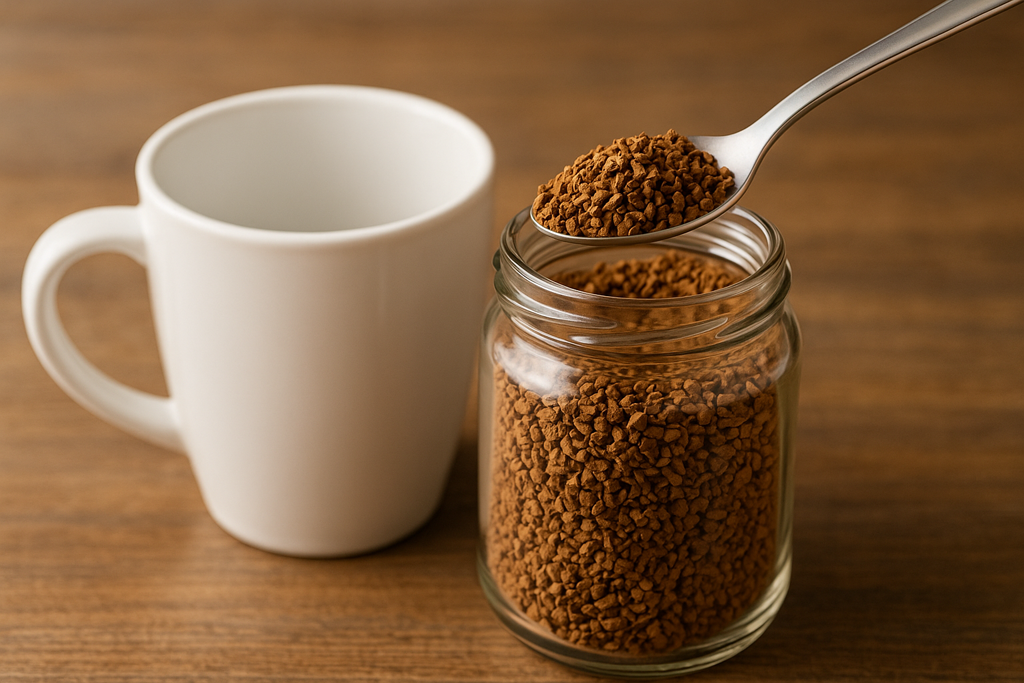
Instant coffee is a pre-brewed, dehydrated coffee product made from real coffee beans that have undergone a brewing and drying process to create a soluble powder or granule. It is commonly known as soluble coffee, powdered coffee, or granulated coffee. Instant coffee is designed for quick preparation by simply adding hot water. Instant coffee plays a significant role in global coffee consumption due to its convenience, affordability, and long shelf life.
How Instant Coffee Is Made
The production of instant coffee involves brewing ground coffee beans to extract flavor and aroma, concentrating the liquid extract, and then drying it into a shelf-stable form. This transformation from brewed liquid to solid granules or powder is achieved through two primary dehydration techniques: freeze-drying and spray-drying. These processes preserve the soluble solids of coffee while removing water content.
Freeze-Dried Instant Coffee
Freeze-dried instant coffee is made by freezing concentrated coffee extract and then placing it in a vacuum chamber to sublimate the ice directly into vapor. This vacuum freeze-drying process retains more of the coffee’s volatile aromatic compounds, resulting in superior flavor preservation. Freeze-drying requires equipment such as a freeze-drying chamber and is favored for high-quality instant coffee products due to its ability to maintain texture and taste.
Spray-Dried Instant Coffee
Spray-dried instant coffee is produced by spraying concentrated coffee extract through high-speed nozzles into a hot-air drying tower. The droplets dry rapidly as they fall, forming fine powder or tiny granules. Spray drying is cost-effective and suitable for mass production, but it tends to result in lower retention of coffee aroma and flavor. The process may involve radiation heating, belt agglomeration, and rotating wheels for drying uniformity and efficiency.
Types of Instant Coffee Products
Instant coffee is sold in multiple forms, each tailored to different consumer preferences and usage scenarios. Below are the most common types of instant coffee:
- Powdered Coffee: Fine, quick-dissolving coffee powder designed for rapid mixing in hot water. Often used in vending machines and single-serve sachets.
- Granulated Coffee: Coarser than powder, granulated coffee dissolves slightly slower but offers better handling and less dust.
- Freeze-Dried Crystals: These coffee crystals are produced using freeze-drying and are known for preserving aroma and flavor. Often marketed as premium options.
- Coffee Mixes: Pre-blended with ingredients like non-dairy creamer, sugar, or flavoring agents. Popular in instant “3-in-1” packets.
- Decaffeinated Instant Coffee: Contains significantly reduced caffeine content while retaining coffee taste. Ideal for caffeine-sensitive consumers.
Packaging formats of instant coffee vary from individual sachets to large resealable jars, and solubility can differ slightly based on grind and production method.
How to Prepare Instant Coffee at Home
Preparing instant coffee at home is a quick process that requires only hot water and coffee granules. Flavor can be adjusted with additions like milk or syrup, depending on personal preference. Below is a simple, step-by-step guide for preparing instant coffee at home, including ideal brewing temperature and flavor adjustment options.
- Boil water to a temperature of approximately 85–95°C.
- Add 1 to 2 teaspoons of instant coffee granules into a cup.
- Pour hot water over the granules and stir thoroughly until dissolved.
- Add milk, sugar, or flavored syrup according to taste.
Instant Coffee vs. Ground Coffee
Instant coffee differs significantly from ground coffee in terms of preparation, flavor, and composition. Ground coffee is made by grinding roasted coffee beans and requires brewing equipment to extract flavor, while instant coffee is pre-brewed and dissolves directly in hot water. The following table compares key aspects of each type for clarity.
| Aspect | Instant Coffee | Ground Coffee |
|---|---|---|
| Preparation Method | Mix with hot water | Requires brewing equipment |
| Brewing Time | 10 seconds | 3–5 minutes |
| Flavor Profile | Milder, less complex | Richer, full-bodied |
| Caffeine Content (per cup) | 60–80 mg | 80–120 mg |
| Convenience | Highly convenient | Moderate to low |
Caffeine and Nutritional Content of Instant Coffee
Instant coffee contains varying levels of caffeine and beneficial compounds like polyphenols. However, it may also reduce the absorption of dietary iron depending on timing of consumption. The table below outlines the nutritional composition of instant coffee per 225 ml serving, including its caffeine levels, antioxidant content, and potential impact on mineral absorption.
| Nutrient / Metric (per 225 ml) | Instant Coffee | Notes |
|---|---|---|
| Caffeine | 60–80 mg | Lower than brewed coffee |
| Polyphenols | ~320 mg | Provides antioxidant benefits |
| Iron Absorption | Reduced to 0.97% or 0.53% | More pronounced when consumed with meals |
| Calories | 0–2 kcal | Black, unsweetened preparation |
| Total Carbohydrates | 0 g | Unless mixed with sugar or additives |
| Protein | 0.1 g | Negligible |
| Total Fat | 0 g | Contains no fats |
| Cholesterol | 0 mg | No animal-derived ingredients |
| Sodium | 0–5 mg | Depends on brand formulation |
| Acidity (pH) | ~5.0–5.5 | Moderately acidic; may affect sensitive stomachs |
| Dietary Fiber | 0 g | Filtered out during extraction |
Common Brands Of Instant Coffee
Popular instant coffee brands differ in bean selection, processing methods, and flavor attributes. Below is a breakdown of common brands and how their ingredients and techniques shape the final taste:
- Nescafé Gold: Primarily uses high-quality Arabica beans, resulting in a smoother, more balanced flavor profile with subtle acidity and soft aroma. Often freeze-dried for better flavor retention.
- Folgers Instant: Typically contains a blend of Robusta beans, which yield a stronger, more bitter flavor. Spray-drying is commonly used, which may reduce aroma intensity but supports affordability.
- Starbucks VIA: A premium freeze-dried option using 100% Arabica beans. Offers a rich, full-bodied taste with strong aromatic notes and a noticeable roast intensity.
- Mount Hagen: An organic instant coffee brand using freeze-dried Arabica beans. Known for its mild flavor, clean finish, and ethical sourcing.
- Taster’s Choice (by Nescafé): Offers lighter roast profiles with a neutral flavor balance and lower bitterness. Often positioned as an everyday coffee option.
Flavor profiles across brands vary by roast level, bean type, drying method, and formulation. Arabica-based products tend to be smoother and more aromatic, while Robusta-heavy blends offer more bitterness and caffeine strength.
Advantages of Instant Coffee
Instant coffee offers several benefits that make it appealing for both everyday use and specific situations:
- Long Shelf Life: Instant coffee can remain stable for over two years without refrigeration, making it ideal for bulk storage and emergency preparedness.
- High Brewing Convenience: Requires no brewing equipment—just hot water—making it perfect for travel, offices, and minimalistic kitchens.
- Minimal Coffee Waste: Because it fully dissolves in water, instant coffee produces no spent grounds or residue, reducing cleanup and landfill contribution.
- Quick Preparation: A cup can be made in under 30 seconds, with minimal effort or skill.
- Portability: Commonly packaged in sachets or sticks, instant coffee is easy to carry and measure on the go.
Disadvantages of Instant Coffee
Despite its convenience, instant coffee comes with trade-offs in terms of flavor quality and environmental impact:
- Lower Flavor Complexity: Instant coffee generally lacks the nuanced aroma and depth found in freshly brewed coffee due to processing losses.
- Environmental Impact: Industrial production (especially spray-drying) consumes significant energy and often relies on single-use packaging, which contributes to waste and emissions.
- May Use Lower-Quality Beans: Many instant brands rely on Robusta beans, which are more bitter and less aromatic than Arabica.
- Limited Freshness Options: Once opened, exposure to moisture or air can degrade the product faster than expected.
- Possible Additives: Some instant coffee blends, especially flavored or 3-in-1 types, may include sugars, stabilizers, or synthetic flavorings.
Historical Background and Evolution of Instant Coffee
The development of instant coffee spans more than a century, involving key inventors, innovations, and global events. The timeline below highlights the major milestones:
- 1890: David Strang of New Zealand invents the first version of instant coffee using a patented dry hot-air process.
- 1901: Japanese-American chemist Satori Kato patents an improved soluble coffee method and introduces it at the Pan-American Exposition.
- 1938: Nestlé launches Nescafé as a freeze-dried instant coffee to help preserve surplus Brazilian coffee beans.
- 1940s: During World War II, Nescafé was included in U.S. military rations, which helped expand its global reach and brand recognition.
- Post-WWII America: Instant coffee gains widespread popularity in U.S. households, valued for its convenience and shelf life.
- 1950s–1980s: Advancements in spray-drying and freeze-drying improve flavor retention, texture, and scalability.
- 2000s–Present: Premium brands reintroduce freeze-dried techniques with high-quality Arabica beans to meet specialty coffee trends.
Other Uses of Instant Coffee
Beyond beverages, instant coffee is valued for its solubility, pigmentation, and aromatic profile—making it useful in various culinary, artistic, and practical applications:
- Cooking: Instant coffee is used to add depth and savory complexity to dishes such as stews, chili, barbecue sauces, and dry rubs for meat.
- Baking: Instant coffee enhances chocolate flavor in desserts like cakes, brownies, cookies, and tiramisu. Its powdered form allows easy integration into batter or dry mix.
- Caffenol-C Photography: Instant coffee serves as a core ingredient in Caffenol-C, a DIY black-and-white film developer made with vitamin C and washing soda.
- Paper Staining and Coffee Dyeing: Instant coffee is commonly used in crafts to dye paper or fabric, creating vintage, sepia-toned effects for journaling, props, and textile art.
- Art and Mixed Media: Instant coffee can be applied in visual arts to create textured, earthy backgrounds or antique finishes due to its strong pigmentation and water solubility.
Frequently Asked Questions About Instant Coffee
Is instant coffee the same as ground coffee?
No, instant coffee is not the same as ground coffee. Instant coffee is brewed, dehydrated, and processed into soluble form, while ground coffee requires brewing and filtering from roasted beans. The preparation methods, flavor profiles, and physical structures differ significantly.
Does instant coffee have less caffeine than brewed coffee?
Yes, instant coffee typically has less caffeine than brewed coffee. A standard cup of instant coffee contains 60–80 mg of caffeine, while brewed coffee ranges from 80–120 mg depending on the bean and method.
What makes freeze-dried instant coffee better than spray-dried?
Freeze-dried instant coffee is better than spray-dried coffee because it preserves more of the original coffee’s aroma and taste through a gentle sublimation process that avoids high heat. Spray-dried instant coffee, by contrast, uses high-temperature air in drying towers, which leads to greater loss of aromatic compounds.
Is instant coffee healthy to drink daily?
Instant coffee is generally safe and can be healthy to drink daily in moderation, due to its polyphenol and antioxidant content, which may support overall health. However, it may reduce iron absorption if consumed with meals and can sometimes irritate sensitive stomachs.
Can instant coffee go bad?
Yes, instant coffee can go bad over time, particularly if exposed to moisture, despite its long shelf life. Signs of spoilage include clumping, a musty or off-smell, and diminished flavor. To preserve quality, store instant coffee in a cool, dry place in an airtight container.
Which instant coffee brand tastes most like fresh coffee?
The instant coffee brands that taste most like fresh coffee are Nescafé Gold and Starbucks VIA, both of which use higher-quality Arabica beans and freeze-drying processes to preserve flavor and aroma. These methods enhance the flavor profile and make the experience more similar to freshly brewed coffee.
Why is instant coffee cheaper than ground coffee?
Instant coffee is cheaper than ground coffee because it often uses lower-grade beans like Robusta and benefits from economies of scale in production. Spray drying is a cost-effective method that further reduces manufacturing costs.
Is decaf instant coffee truly caffeine-free?
No, decaffeinated instant coffee is not completely caffeine-free. It contains trace amounts of caffeine, usually under 3 mg per cup, compared to regular instant coffee’s 60–80 mg.
Can I use instant coffee in recipes?
Yes, instant coffee is widely used in recipes for baking (e.g., brownies, tiramisu) and cooking (e.g., stews, marinades). Its concentrated flavor enhances dishes without additional liquid volume.
Is instant coffee considered real coffee?
Yes, instant coffee is considered real coffee because it is made from actual brewed coffee that is later dehydrated into a soluble form. This sets it apart from substitutes like chicory or barley-based beverages, which contain no real coffee.