
What Is Turkish Coffee?
Turkish coffee is a traditional method of coffee preparation using very finely ground Arabica beans brewed unfiltered in a special pot called a cezve or ibrik. The result is a rich, thick beverage topped with a layer of foam, served in small porcelain cups without milk or cream. Recognized by UNESCO as part of the Intangible Cultural Heritage of Humanity, Turkish coffee holds deep cultural, social, and historical significance across the Middle East, Balkans, and Eastern Europe.
What Makes Turkish Coffee Unique?
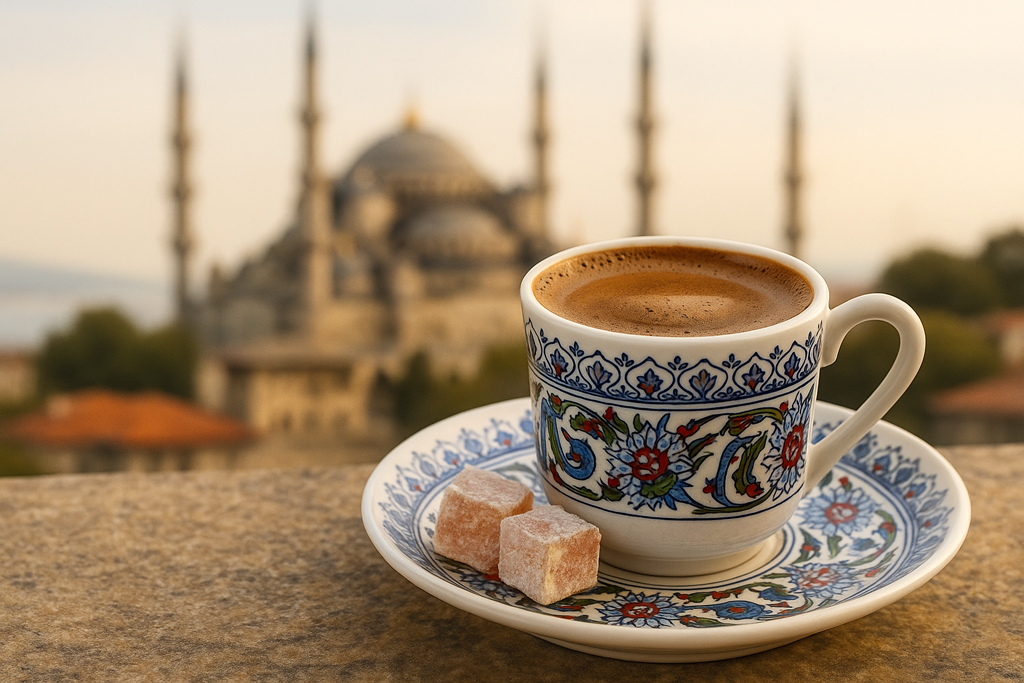
Turkish coffee is distinct because it uses powder-fine ground Arabica beans, brewed without filtration, resulting in a dense, flavorful liquid. The preparation involves slow heating in a cezve, a small metal pot with a long handle, typically made from copper. This method allows a thick foam to rise, which is considered a mark of quality. The drink is traditionally served in small porcelain cups called kahve fincanı, and the grounds are not stirred after pouring, allowing them to settle at the bottom.
Traditional Tools and Ingredients Used in Turkish Coffee
The following tools and ingredients are essential in the preparation of authentic Turkish coffee, especially in ceremonial or home settings.
- A cezve, traditionally made from copper or brass, is the defining vessel used to brew Turkish coffee over a flame or hot sand.
- A manual grinder or brass/copper mill is used to grind Arabica beans into a flourlike powder suitable for Turkish brewing.
- Arabica coffee beans are preferred for their smooth and aromatic flavor; Robusta may be blended for additional strength.
- Water must be cold and filtered to ensure clarity and proper foam formation during brewing.
- Sugar is optionally added before brewing, with common sweetness levels including sade (none), az şekerli (light), orta (medium), and çok şekerli (very sweet).
- Optional spices like cardamom, mastic, salep, or ambergris may be added depending on regional traditions.
- Turkish coffee is served in small porcelain cups called kahve fincanı, often accompanied by a glass of water and Turkish delight.
How to Make Turkish Coffee Using a Cezve?
The following steps outline the traditional method of making Turkish coffee using a cezve and slow brewing technique.
- Measure one heaping teaspoon of powder - fine ground Arabica coffee per serving and place it in the cezve along with cold filtered water - about 70-100 ml per cup.
- Add sugar based on your preference: sade (none), az şekerli (lightly sweetened), orta (medium sweet), or çok şekerli (very sweet). Optional spices like cardamom can be added at this stage.
- Stir the mixture until fully dissolved and place the cezve over low heat, preferably on hot sand or a gas stove, to heat slowly.
- As the foam begins to rise, remove the cezve just before it boils and distribute some of the foam into each serving cup.
- Return the cezve to heat and repeat the foam-rise process two more times to build a richer flavor and denser texture.
- Pour the remaining coffee slowly into the cups without stirring, allowing the grounds to settle and preserve the foam layer on top.
Health Benefits and Nutritional Aspects of Turkish Coffee
Turkish coffee delivers a dense concentration of bioactive compounds that offer potential health benefits. Here’s how its unique properties support well-being:
- Rich in Antioxidants and Chlorogenic Acids: Turkish coffee contains polyphenol antioxidants and chlorogenic acids, which may support cardiovascular health and reduce oxidative stress.
- Supports Cognitive Function: Regular intake of Turkish coffee may offer neuroprotective benefits, potentially lowering the risk of Alzheimer’s and Parkinson’s diseases.
- Anti-Inflammatory Effects: Turkish coffee may help reduce inflammation markers such as TNF-α and IL-6, contributing to better systemic health.
- May Reduce Risk of Chronic Disease: Turkish coffee consumption is linked to a lower risk of type 2 diabetes and liver cancer.
- Unfiltered Preparation Retains Cafestol: Due to its unfiltered nature, Turkish coffee retains cafestol - a compound that can raise LDL cholesterol in high doses. Moderate consumption, however, is generally safe.
- Boosts Alertness and Mood: The high concentration of natural caffeine in Turkish coffee enhances mental alertness and may help reduce symptoms of depression.
The Cultural Significance of Turkish Coffee in Society
Turkish coffee plays a central role in social life, hospitality, and cultural rituals throughout Turkey and the wider region. Serving coffee to guests is a symbolic act of welcome and respect, often accompanied by Turkish delight and a glass of water. The Turkish proverb, “A cup of coffee commits one to forty years of friendship,” reflects the beverage's deep social resonance. In traditional settings, coffee gatherings—especially in kahvehane (coffeehouses)—serve as forums for storytelling, poetry, and political discourse. Its ceremonial role extends to family visits, business meetings, and public celebrations.
Fortune-Telling and Engagement Rituals Involving Turkish Coffee
Turkish coffee is closely linked to kahve falı, or fortune-telling using coffee grounds. After drinking, the cup is turned upside down on the saucer and left to cool. The shapes formed by the settled grounds are interpreted to reveal aspects of the drinker's future. This ritual is commonly practiced among friends and family, adding a layer of entertainment and intimacy. During traditional engagement ceremonies, the bride-to-be prepares Turkish coffee for the groom’s family. She may serve the groom salted coffee as a humorous test of patience and character. These customs reinforce coffee’s role in Turkish courtship and social bonding.
Origin of Turkish Coffee
Turkish coffee originated in the Ottoman Empire during the 16th century, introduced to Istanbul by Özdemir Pasha, governor of Yemen. Initially prepared in the Ottoman Palace, it quickly spread to coffeehouses (kahvehane), becoming central to public life. From Istanbul, Turkish coffee traveled to Europe, with the first coffeehouse opening in Venice in 1645, followed by Paris and London. Coffee merchants and travelers, including Kurukahveci Mehmet Efendi, helped popularize the method globally. In 2013, UNESCO inscribed Turkish coffee into its Representative List of the Intangible Cultural Heritage of Humanity, recognizing its enduring cultural value.
Regional and Historical Variants of Turkish Coffee
The following Turkish coffee variants reflect regional adaptations and historical influences from different cultures.
- Dibek Coffee, popular in Gökçeada and Manisa, uses coarsely ground beans and a wooden mortar, yielding a milder flavor and thicker consistency.
- Cilveli Coffee, unique to Manisa, includes sugar and is presented in an ornate fashion, traditionally served by women during courtship ceremonies.
- Greek Coffee (briki method) is nearly identical to Turkish coffee but culturally distinguished due to political identity; served in small cups with foam.
- Bosnian Coffee is brewed in a džezva and poured over a sugar cube placed in the cup, emphasizing ritualized service and symbolism.
- Armenian Coffee (haykakan surč) features spices like cardamom or cloves and is often paired with traditional pastries like gata or nazook.
- Eastern European variants such as turecká káva (Czech Republic, Slovakia) and turska kafa (Balkans) retain Ottoman brewing methods with local adaptations.
Modern Innovations and Appliances for Brewing Turkish Coffee
Contemporary innovations such as the SAKI Turkish Coffee Maker and similar electric cezve appliances have made brewing Turkish coffee more accessible. These devices automate temperature control, foam management, and brewing time, producing consistent results with minimal effort. While purists argue that traditional cezve brewing—especially over hot sand—produces superior texture and flavor, modern devices appeal to busy users and global consumers. Many appliances preserve the traditional foam layer and allow for sugar level adjustments. These innovations bridge heritage and convenience, expanding Turkish coffee's global reach.
Frequently Asked Questions About Turkish Coffee
What makes Turkish coffee different from espresso or filter coffee?
Turkish coffee differs significantly from espresso and filter coffee in preparation method, grind size, and flavor profile. It uses powder-fine ground coffee brewed directly in water without filtration, resulting in a thick, sludgy base. Unlike espresso, which is made under pressure and has crema, Turkish coffee is brewed slowly in a cezve and forms a creamy foam on top. Filter coffee uses coarser grounds and separates solids entirely through paper or metal filters.
Is Turkish coffee stronger than regular coffee?
Yes, Turkish coffee is stronger than regular coffee because it contains slightly more caffeine per fluid ounce, owing to its concentrated brewing style. However, since it is served in smaller quantities, the total caffeine per cup remains moderate. Its perceived strength also comes from the dense body, thick foam, and intense aroma—not just the caffeine content.
What does Turkish coffee taste like?
Turkish coffee tastes bold, earthy, and slightly bitter, with a velvety mouthfeel that distinguishes it from filtered brews. When sugar is added during brewing, it develops an integrated sweetness that balances its natural bitterness. Optional spices such as cardamom contribute aromatic complexity, creating a uniquely rich and layered flavor profile.
Do you drink the grounds in Turkish coffee?
No, the grounds in Turkish coffee are not consumed. After the liquid portion is sipped, the grounds settle at the bottom of the cup and are left undisturbed. These grounds are commonly used for fortune-telling practices known as kahve falı.
What kind of beans are best for Turkish coffee?
Arabica beans are best for Turkish coffee because they offer mild acidity, a rich aroma, and a balanced flavor—qualities ideal for its unfiltered brewing method. Some traditional blends also incorporate Robusta beans to enhance body and bitterness. Regardless of the type, the beans must be roasted medium to dark and ground to a flourlike consistency using a manual grinder or commercial burr mill.
Can Turkish coffee be made without a cezve?
Yes, Turkish coffee can be made without a cezve by using a small saucepan or modern electric Turkish coffee machines. However, the authentic foam and traditional flavor are more consistently achieved with a proper cezve—especially one made of copper, which retains heat evenly during the slow brewing process.
Is there a proper way to serve Turkish coffee?
Yes, Turkish coffee is traditionally served in small porcelain cups (kahve fincanı) on a tray, accompanied by a glass of cold water and a piece of Turkish delight. The host does not stir the coffee once poured, to preserve the foam and allow grounds to settle. Guests are expected to savor it slowly and appreciate the gesture of hospitality.
What spices are commonly added to Turkish coffee?
Cardamom is the most commonly added spice in Turkish coffee. It is known for its floral and citrusy aroma. Regional variations of Turkish coffee also use mastic for a pine-like flavor, salep for added creaminess, and ambergris—historically—for its musky sweetness. These ingredients reflect diverse cultural traditions and local preferences across regions where Turkish coffee is enjoyed.
What is the salted coffee test in Turkish engagement ceremonies?
The salted coffee test is a traditional part of Turkish engagement ceremonies, where the bride-to-be prepares Turkish coffee for the groom’s family. As a symbolic test of patience and character, she may serve the groom’s cup with salt instead of sugar. The groom is expected to drink it without complaint, demonstrating respect, humility, and readiness for marriage.
Is Turkish coffee considered healthy or harmful?
Turkish coffee is generally considered healthy when consumed in moderation. It contains high levels of antioxidants and chlorogenic acids, which are associated with reduced risks of type 2 diabetes, Alzheimer’s disease, and depression. However, because it is unfiltered, Turkish coffee retains cafestol—a compound that may raise LDL cholesterol in some individuals. For most healthy adults, moderate consumption poses little risk and may offer notable health benefits.